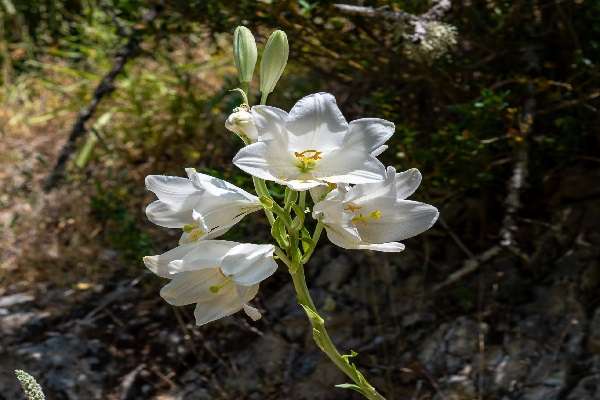
Ένα από τα πιο σπάνια και εντυπωσιακά αυτοφυή κρίνα της Ελλάδας ανθίζει αυτή την εποχή σε λίγες μόνο περιοχές της χώρας και μία από αυτές είναι οι μαγευτικές Πρέσπες.
Ο λόγος για το Κρίνο της Παναγίας, που αποτελεί πολύτιμο δείκτη οικολογικής ποιότητας.
Το Κρίνο της Παναγίας, επίσης γνωστό ως Παρθενόκρινος (Lilium candidum), είναι ένα εντυπωσιακό λουλούδι με λευκά, αρωματικά άνθη, που ανθίζει αυτήν την περίοδο. Είναι σύμβολο αγνότητας και αθωότητας στην χριστιανική παράδοση και έχει αναφορές σε αρχαίες τοιχογραφίες και τέχνη. Απεικονίσεις του κρίνου υπάρχουν σε τοιχογραφίες της Μινωικής περιόδου, όπως στον Πρίγκηπα με τα κρίνα στην Κνωσό, και σε μυκηναϊκά όπλα.
Τα υπέροχα λουλούδια του παρθενόκρινου είναι ιδιαίτερα δημοφιλή σε στολισμούς γάμων, καθώς επίσης αποτελούν ιδανικά λουλούδια για στολισμό σε βάζο μέσα στο σπίτι χαρίζοντας μοναδική ομορφιά κι ένα γλυκό άρωμα. Φωτογραφία N. Tsilis από Εταιρεία Προστασίας Πρεσπών.
This website uses cookies to improve your experience while you navigate through the website. Out of these cookies, the cookies that are categorized as necessary are stored on your browser as they are essential for the working of basic functionalities of the website. We also use third-party cookies that help us analyze and understand how you use this website. These cookies will be stored in your browser only with your consent. You also have the option to opt-out of these cookies. But opting out of some of these cookies may have an effect on your browsing experience.
Necessary cookies are absolutely essential for the website to function properly. This category only includes cookies that ensures basic functionalities and security features of the website. These cookies do not store any personal information.
Any cookies that may not be particularly necessary for the website to function and is used specifically to collect user personal data via analytics, ads, other embedded contents are termed as non-necessary cookies. It is mandatory to procure user consent prior to running these cookies on your website.