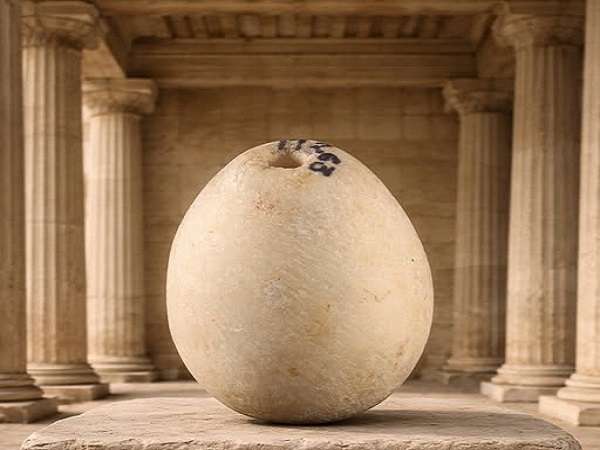
Βλέπετε ένα μαρμάρινο ομοίωμα αυγού του 400-350 π.Χ. Βρέθηκε στην αρχαία γειτονιά του Μουσείου Ακρόπολης, κατά τη διάρκεια της ανασκαφής του οικοπέδου Μακρυγιάννη. Σήμερα εκτίθεται στο Μουσείο της Ανασκαφής.
Το αυγό στην αρχαιότητα ήταν σύμβολο γονιμότητας, αναγέννησης, ανάστασης και συνέχισης της ζωής μετά τον θάνατο. Πραγματικά αυγά ή ομοιώματά τους, τα τοποθετούσαν ως κτερίσματα σε τάφους, τα αφιέρωναν σε ιερά ή τα κατέθεταν σε εγκαίνια ιδιωτικών χώρων.
Στην κορυφή του στενότερου άκρου ανοίγεται μικρός τόρμος για την υποδοχή μεταλλικού στελέχους και τη στερέωση του αυγού σε επιφάνεια. Οι αρχαιομετρικές αναλύσεις έδειξαν την ύπαρξη ζωγραφιστής διακόσμησης σε μπλε και κόκκινο χρώμα: μία φαρδιά ζώνη κάτω, έως τη μέση του αυγού. Επιπλέον, μία πιο στενή στο πάνω μέρος.
This website uses cookies to improve your experience while you navigate through the website. Out of these cookies, the cookies that are categorized as necessary are stored on your browser as they are essential for the working of basic functionalities of the website. We also use third-party cookies that help us analyze and understand how you use this website. These cookies will be stored in your browser only with your consent. You also have the option to opt-out of these cookies. But opting out of some of these cookies may have an effect on your browsing experience.
Necessary cookies are absolutely essential for the website to function properly. This category only includes cookies that ensures basic functionalities and security features of the website. These cookies do not store any personal information.
Any cookies that may not be particularly necessary for the website to function and is used specifically to collect user personal data via analytics, ads, other embedded contents are termed as non-necessary cookies. It is mandatory to procure user consent prior to running these cookies on your website.